cruising with a cpap
When we travel on cruises, bringing our CPAP machines is a must due to our sleep apnea. Managing power and space in the cabin can be tricky since cruise ships often lack convenient outlets near the bed, and extension cords are usually not allowed onboard. Over time, we’ve learned how to navigate these challenges to keep our therapy consistent while enjoying our trips.
We’ve also explored battery backup options to avoid the hassle of cords and power availability. Finding the right portable power supply that is airline-friendly and reliable has made a significant difference in how we travel and use our CPAP machines. Our experience highlights useful tips for others facing similar travel challenges.
Essential Packing Tips for CPAP Users
Deciding Between Standard and Compact CPAP Devices
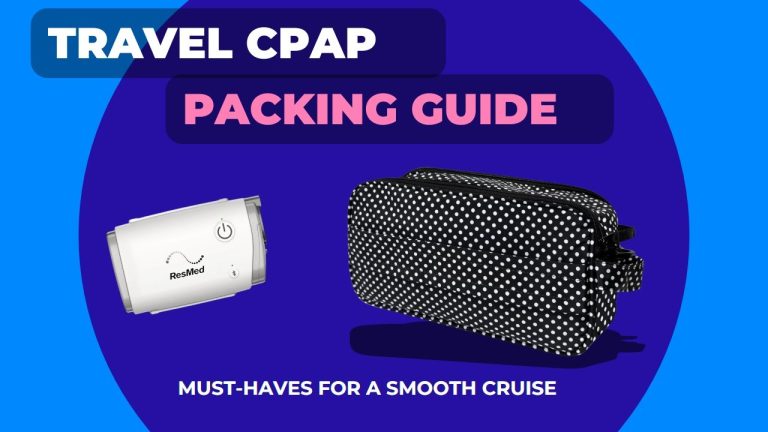
We carry both a full-size CPAP and a travel-sized machine when we cruise. The larger units, like the ResMed AirSense 10, are quieter but bulkier, while smaller machines, such as the AirMini, are lightweight and easy to pack but can be louder. Choosing depends on your comfort with noise and convenience in transport.
What Gear to Take Along
Bringing the right accessories helps a lot. We always pack:
- Extension cords: Useful for powering your CPAP when outlets aren’t near the bed, but cruise lines rarely allow guests to bring their own, so it’s best to ask the staff once on board.
- Distilled water: Needed for humidifiers; you can request it from guest services or your cabin steward.
- Battery backup: A portable battery like the one we use allows CPAP operation without relying on ship power, especially useful if outlets are hard to reach or power outages happen.
Getting Ready Before the Trip
Before we set sail, we make sure to:
- Confirm with the cruise line about extension cords and distilled water availability.
- Pack all necessary cables and adapters for our CPAP and battery system.
- Adjust machine settings, such as turning off humidifiers, to extend battery life if using a backup power source.
- Understand that surge protectors and personal extension cords are typically prohibited onboard, so we rely on the cruise staff for these items.
Navigating Cabin Setups and Power Challenges
Asking Cruise Staff for Power Solutions
If your cabin doesn’t have outlets near the bed, you can request an extension cord from the cruise line. Usually, these cords aren’t waiting in the cabin when you arrive, so you’ll need to ask your cabin steward. They’re happy to bring one at no extra charge, letting you run power from the desk area to your CPAP machine by the bed.
You can also ask for distilled water for your CPAP. This can be requested in advance, through your steward, or the Guest Services line. It usually costs around $3 to $5 per bottle delivered to your room.
Handling the Lack of Outlets Near the Bed
Most cruise cabins don’t have power outlets next to the bed, and nightstands are usually too small to hold a full-size CPAP machine. To deal with this, we use an extension cord that reaches from the desk outlet to the bed. However, extension cords can clutter the room and create tripping hazards, so you need to take care to coil them up during the day.
We’ve also explored battery backup options to avoid dragging cords around. Batteries like the one we use are lightweight, TSA-friendly, and provide reliable power all night without needing a wall outlet.
Policies on Extension Cords and Surge Protectors
Almost all cruise lines forbid passengers from bringing extension cords onboard. They may confiscate cords either before boarding or after they reach your room. It’s best not to pack them yourself.
Regarding surge protectors, some types are recently banned, so check your cruise line’s rules before packing one. Instead, rely on the cruise staff to supply extension cords or use battery backups approved for travel.
Ensuring Reliable Power with Battery Backup
Choosing a TSA-Approved Battery for Travel
We picked the Medistrom Pilot-24 Lite because it weighs only 1.3 pounds and is TSA-friendly. Since its battery capacity is under 100 watt-hours, we can take it on planes in carry-on or checked bags without issues. This makes it ideal for us as frequent flyers who want hassle-free travel with our CPAP machines.
The battery comes with a compact carrying case and adapter cables for several CPAP models, including the ResMed AirSense 10 and AirMini. It doesn’t include a dedicated charger, but you can use your CPAP power cable to charge it in about two hours.
Evaluating Battery Life with Overnight Testing
We ran multiple overnight tests to see how the battery performs. On night one, using the AirSense 10 with the humidifier off, we slept for 7 hours and 40 minutes and still had 3 out of 4 green LEDs left on the battery — a great result.
On night two, with the humidifier on, the battery lasted only about 6 hours before the machine unexpectedly shut off, waking us up. It’s clear the humidifier drains the battery quickly, so we recommend turning it off to get the most out of the battery.
Our third test was with the AirMini, and because it uses a humidifier tablet instead of a heating element, battery life stayed strong for over 7.5 hours without interruption.
Using Battery Backup for Continuous CPAP Power
We use the battery inline with our CPAP machines daily as a backup during power outages. The AC power runs through the battery to the CPAP, so if the power fails, the battery immediately takes over without interruption.
This setup means we can rely on steady, uninterrupted CPAP therapy no matter what, whether at home, on a cruise, or traveling. The battery also has a built-in flashlight and LED indicators so we can check its status easily.
Fine-Tuning CPAP Settings for Cruise Travel
Impact of Using the Humidifier on Battery Duration
When running a CPAP on battery power during a cruise, using the humidifier quickly drains the battery. We found that turning off the humidifier extended battery life significantly, allowing longer sleep times without interruptions. For example, without the humidifier, we got over 7.5 hours of usage with most battery power remaining.
If the humidifier stays on, battery life drops sharply. One night with the humidifier active lasted only about 6 hours before the battery cut out. This sudden shutdown caused an immediate stop in airflow, which woke us up. So, avoiding the humidifier is key to making the battery last through the night.
Modifying EPR and Heated Tubing for Better Battery Performance
The EPR (expiratory pressure relief) setting affects battery use, as it alters airflow pressure during exhale. Although the battery manufacturer suggests turning off EPR to save power, we left it on during testing and had no major issues. Still, switching it off could reduce battery drain.
Heated tubing also pulls extra power, so turning heated tubing off is recommended when using battery backup. We don’t use heated tubing ourselves, so we didn’t test its effect firsthand, but the advice is clear: disabling any heating elements will help extend battery life during cruises.
Travel Experiences and Real-World Results
Comparing Standard CPAP Units to Travel-Friendly Versions
We bring both our full-size CPAP machines and smaller travel models when we cruise. Our full-size ResMed AirSense 10 is bulky, but quieter for me. My wife prefers her compact ResMed AirMini, which is lighter and easier to carry, though it’s a bit louder.
Ship cabins rarely have power outlets by the bed. We usually ask the cabin steward for an extension cord to reach power from the desk area. Although cruise lines generally prohibit bringing your own cords, they will supply one for you if requested.
Managing Battery Power and Care
We chose the Medistrom Pilot-24 Lite battery because it weighs just 1.3 lbs and complies with TSA rules for flights, so we can easily carry it on planes. It charges fully in about two hours and features a built-in flashlight and LED battery level indicators.
During testing, turning off the humidifier was key to conserving battery life. With the humidifier off, the battery powered our AirSense 10 for over 7.5 hours and still had battery left. Using the humidifier reduced battery life to about 6 hours, forcing an unexpected shutdown. Our travel-sized machine with a different humidifier system lasted the whole night comfortably.
Suggestions for Better Rest While Cruising
We recommend disabling the humidifier and EPR (Exhalation Pressure Relief) when using battery power to extend usage. Using an extension cord when available helps avoid battery reliance, but a reliable battery backup is a solid plan.
Keeping distilled water onboard is important for full-size machines, and cruise lines can supply it for a small fee. Organizing cords safely is a must to avoid tripping hazards; otherwise, carrying a battery can give you more freedom to position your CPAP comfortably.
Convenience and Extra Perks for Travelers
Useful Add-ons: Built-in Light and Battery Level Indicators
We really appreciate the small features that make using our CPAP machine easier on the road. One handy addition is the built-in flashlight on the battery pack. It’s great for checking things during power outages or in dark cabins without fumbling around.
The battery pack also has four green LED lights that show how much power remains. This simple display helps us keep track of battery life after a night’s use so we know when to recharge.
Safely Carrying and Storing Your CPAP Gear
Protecting our CPAP machine and accessories while traveling is important to us. We use a dedicated cloth carrying case included with the battery pack to keep everything organized and safe.
Having all the adapter cables, the battery, and the CPAP unit in one place means less hassle during packing and unpacking. It also helps prevent damage from loose gear tumbling around in our luggage.
Group Reflections and Common Travel Experiences
We all know traveling with CPAP machines on cruises comes with challenges. Most cruise cabins don’t have outlets near the beds, and the nightstands are tiny—too small for most CPAP devices. To solve this, we usually ask the cabin steward for an extension cord since bringing our own is usually forbidden and they get confiscated.
Keeping distilled water on hand is another important thing. You can ask guest services or the cabin steward to deliver it, but it typically costs a few dollars. Managing cords in the cabin can be tricky; they’re often spread out or get in the way.
To avoid cord clutter, we switched to using a portable battery backup called the Medistrom Pilot-24 Lite. It’s lightweight, TSA-friendly, and easy to carry. This battery works both for daily use and as an emergency backup, giving us freedom on cruises and flights without worrying about power availability.
In the battery package, we found adapter cables for various CPAP models, a carrying case, and a quick start guide. It charges in about two hours and even has a built-in flashlight, which is handy during sudden power outages.
We ran tests with our machines. First, without the humidifier, the battery lasted almost eight hours, which was great. But when we tried it with humidifier on, it only lasted about six hours before shutting off suddenly with a warning beep. This confirmed the advice to avoid the humidifier when relying on battery power.
Our experience with the smaller travel CPAP machine was similar. It lasted all night on battery with its built-in humidifier, which doesn’t have a heating element. It’s a quieter option for us, though I personally find it a bit loud.
Key Takeaways:
- Extension cords rarely come with the room; ask your steward.
- Don’t bring your own extension cord—it’s often banned.
- Distilled water is available but can cost extra.
- Battery backups like the Medistrom Pilot-24 Lite make travel easier.
- Avoid using the humidifier on battery to preserve power.
- Different CPAP models affect battery life and noise levels.
This approach helps us enjoy cruises without sacrificing our sleep quality or health.